(Videogame Trailer)
ANDARA: Rise for Rebellion is a third person shooter based on games like “Rachet & Clank” and “Returnal”, with mechanics that bring speed to the gameplay similar to shooters like “Doom”.
Available for free download on Steam.
Story
The game tells the story of Andara, the heir to the throne of an interplanetary alien race led by her father, Ordon. In her attempt to colonise other planets in search of resources, she discovers her father’s tyranny first hand, as he is willing to do anything to achieve his goal, including killing Andara’s best friend. Andara then begins a revolt to stop her father’s tyrannical invasion and save the planet Hailstone.
Work Methodology
A multidisciplinary team of 7 programmers, 6 artists, and 3 game designers are working on the development. The progress of the game can be followed on @AndaraGame.
Our project aims to simulate the work of a video games studio closely. We have set deadlines and milestones, such as the prototype and the first playable version. Our approach is based on the scrum methodology, with weekly sprints that start and end with meetings to review the progress of each department and assess our achievements.
Effective communication is essential for the success any project. We emphasize communication within and between teams. It is vital to keep in constant contact with our fellow designers and artists to ensure the healthy development of the game and improve iteration.
What I did
- AI of Special Laser enemy
- Behavior tree (EQS, BBComp, New BTTasks…).
- Animations management (NotifyStates, BlendSpaces, StateMachine…).
- AIController (AI Perception, Set/RemoveFocus…).
- Part of the AI of Putty enemies and Special Shooter enemy.
- Spawner actor used for wave management and state of aggressiveness of enemies in battle arenas.
- Gameplay hazards such as Laser Columns and Damaging platforms.
- Particles implementation in some of the enemy actions, and their corresponding optimisation.
- Usage of Object Pooling for better performance.
Implementation examples
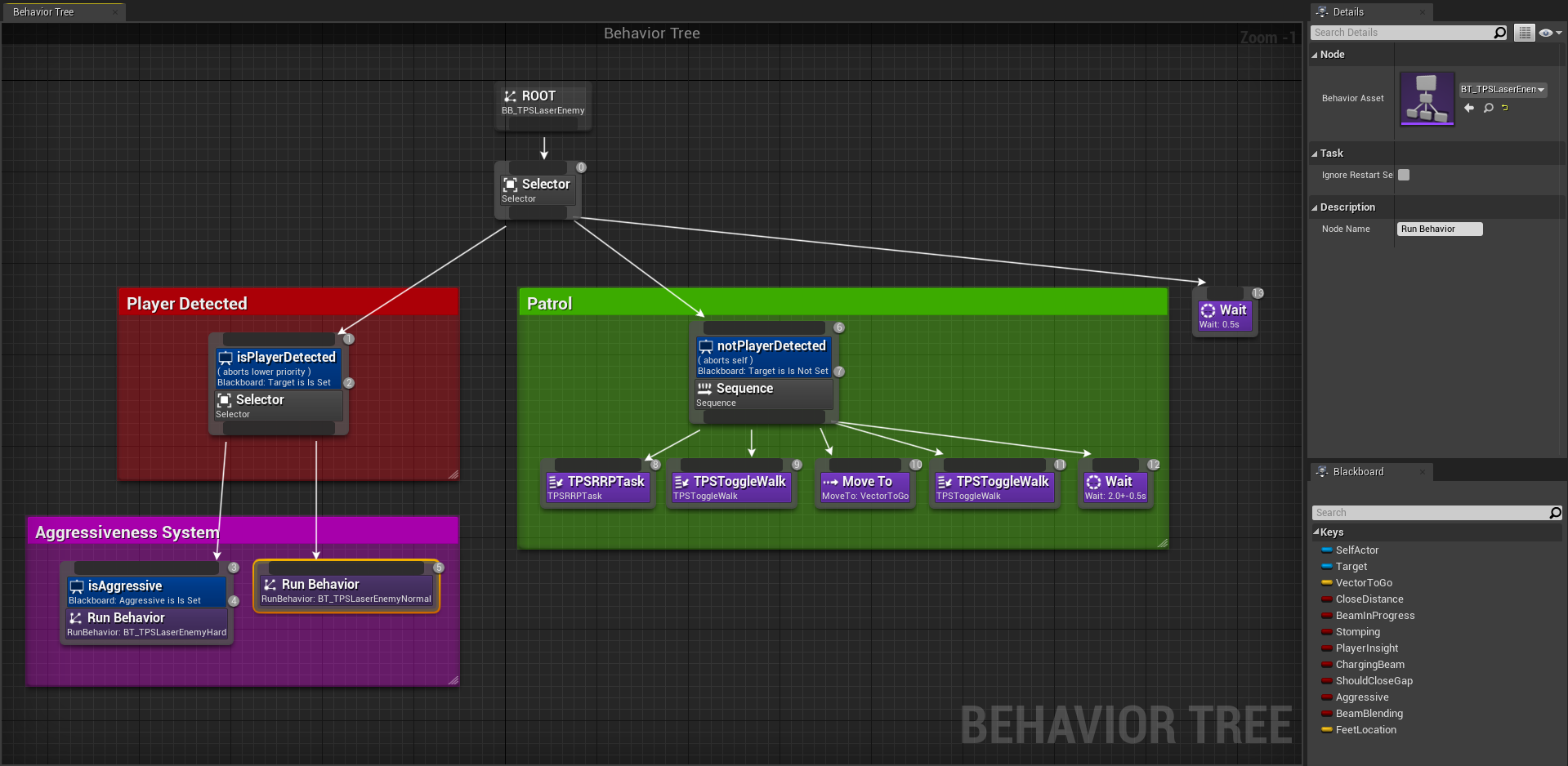
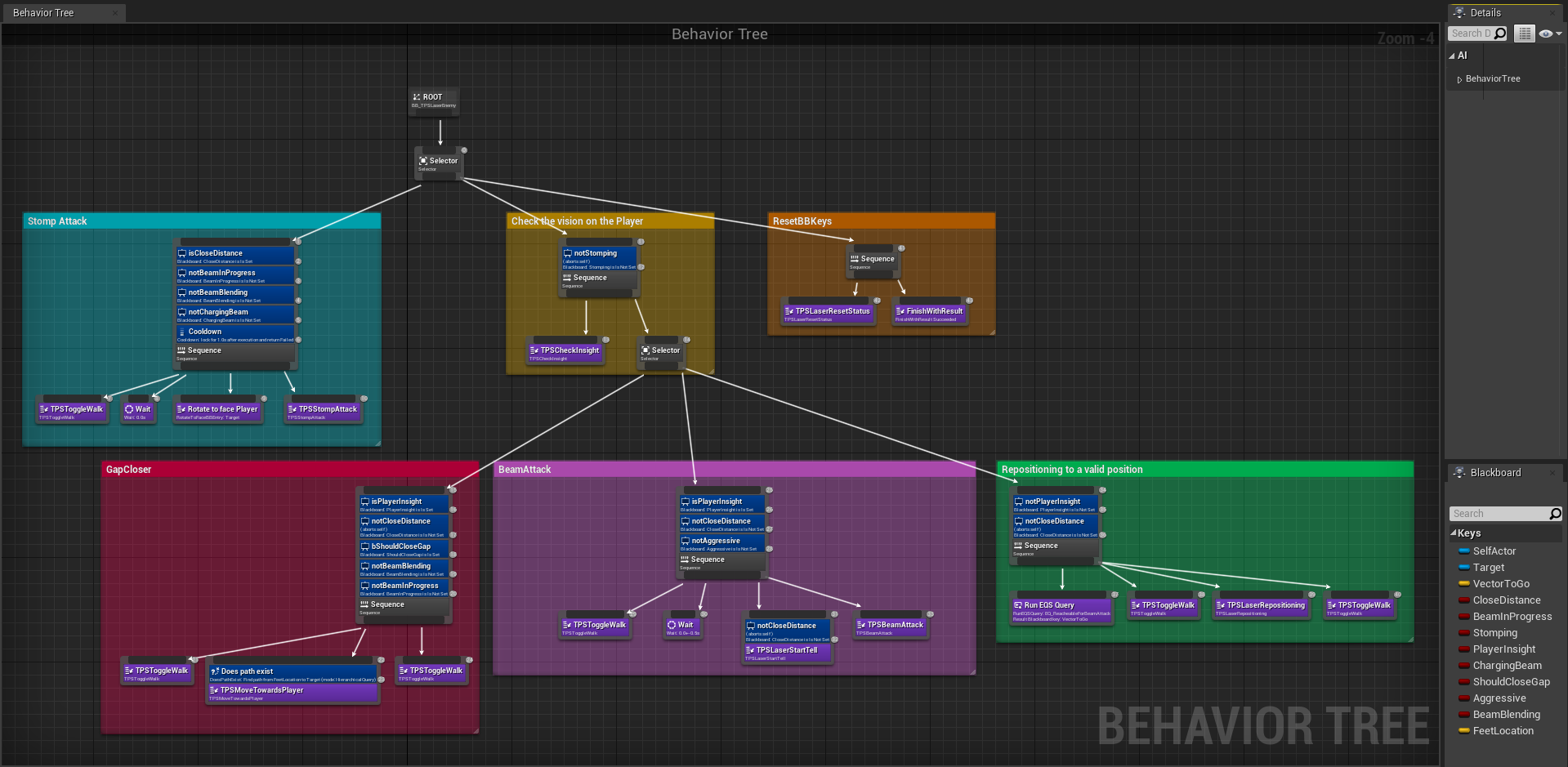
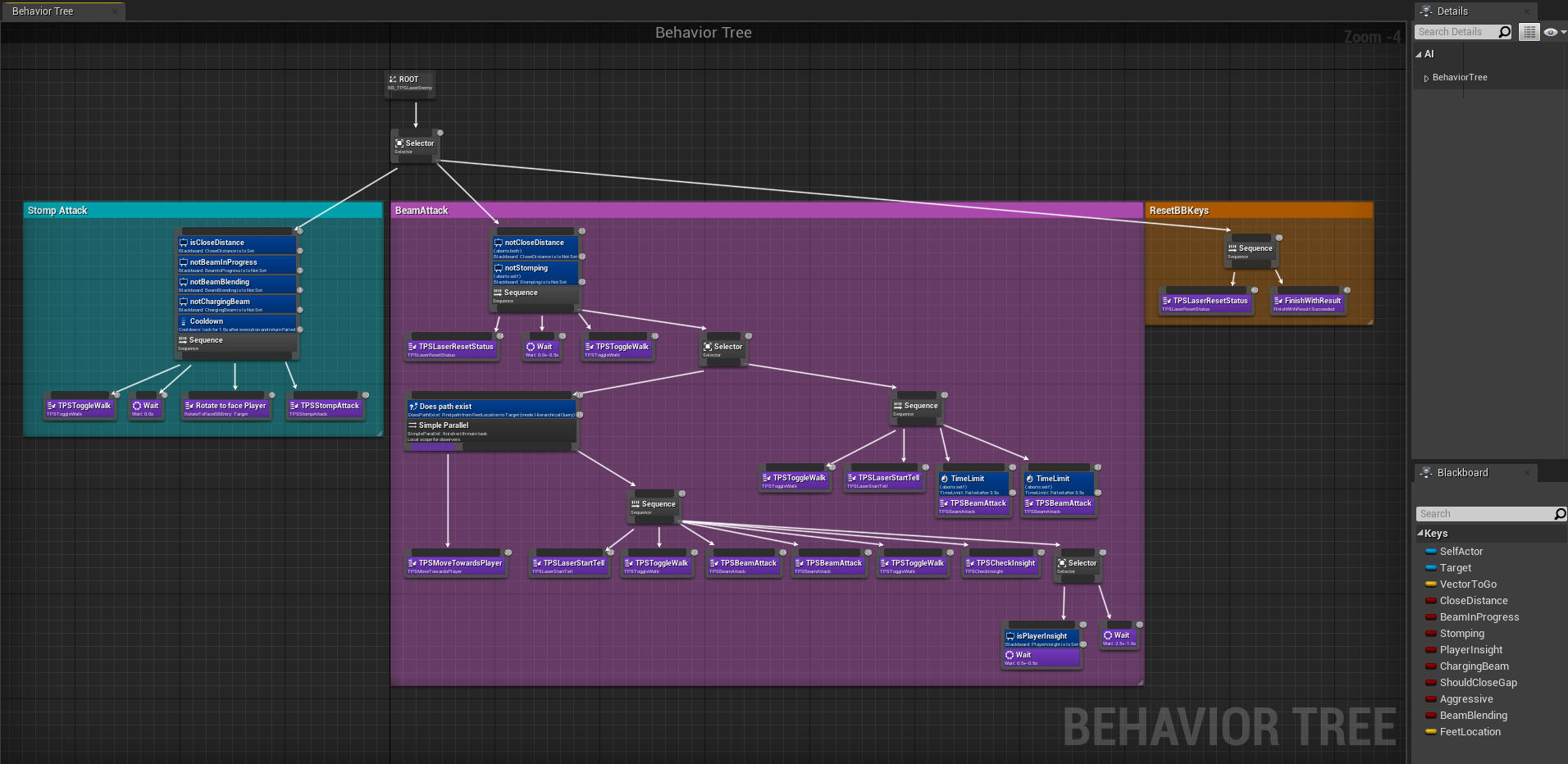
The behaviour of the enemies is marked by an aggressiveness system, which, based on variables such as the number of enemies remaining, and the current life of the enemy, will modify the attack patterns and parameters of the enemy. Due to this aggressiveness system, the Behavior Tree of each of the enemies in this game was divided into 3 different BTs:
- The main BT which form the implemented aggressiveness system will decide which sub-tree should be executed.
- The non-aggressive BT which implements the tasks the enemy will take when it is in its normal state.
- The aggressive BT which implements the tasks the enemy will take when it is in its aggressive state.
How it was developed
You can see part of the development process of the project in this youtube documentary:
(Making of documentary)
Developed by:
The repository for this project is not publicly accessible but code snippets may be shared with those who are interested in its implementation. Get in touch with me for futher details.